
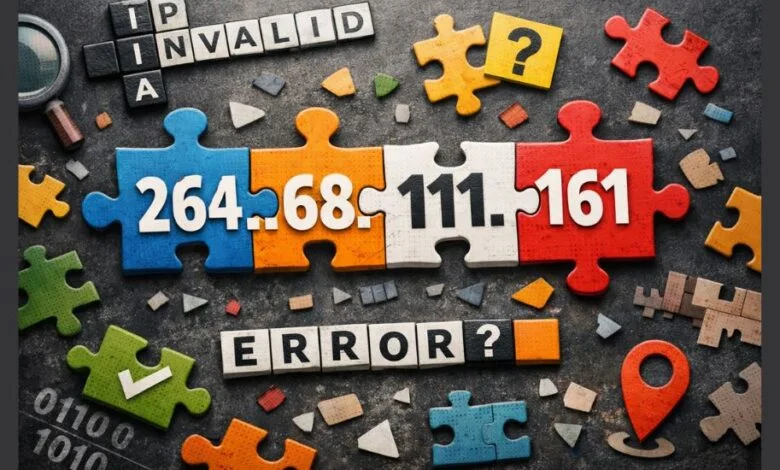
IP addresses keep the internet running, but most people don’t think about them until something odd shows up in a log or alert. You might be wondering why a strange number suddenly appears in your analytics or firewall report. One address that often triggers questions is 264.68.111.161. It looks like a normal IPv4 address, but it breaks a basic rule. That’s where the confusion starts.
This guide explains what’s going on in plain terms. You’ll learn what this address means, why it appears, and whether you need to worry. We’ll connect each idea step by step so the logic stays clear: what causes it, what happens next, and what you should do.
Understanding IP Addresses and How They Work
An IP address identifies a device on a network. The device sends data, the IP address tells the network where to deliver it, and the connection works. That’s the cause and effect. No IP address, no data delivery.
Most systems still use IPv4. IPv4 uses four numbers separated by dots. Each number is an octet. Each octet must fall between 0 and 255. This rule exists because IPv4 stores each octet in 8 bits, and 255 is the highest value those bits can hold.
Once you know this rule, spotting invalid addresses becomes easy. If one number goes beyond 255, the whole address fails.
Why 264.68.111.161 Is Not a Valid IPv4 Address
Here’s the key issue. The first number in 264.68.111.161 is 264. IPv4 does not allow numbers higher than 255. Cause: the number exceeds the limit. Effect: the address becomes invalid.
Because of this, the address cannot belong to any real device on the internet. It can’t send traffic, receive data, or identify a user. People often miss this detail, which leads to unnecessary worry.
Once you recognize this limit, the confusion fades. The address looks real, but it isn’t.
Why This Address Appears in Logs or Reports
You may still ask, “If it’s invalid, why do I see it at all?” That’s a fair question. The answer usually points to system behavior, not attackers.
One common cause is software error. An application fails to read a real IP address. As a result, it saves corrupted data. Cause: bad input handling. Effect: an invalid IP shows up in logs.
Another cause involves testing. Developers often insert fake IP addresses to test how systems respond. If they forget to remove them, those values leak into production logs.
Automated scripts also play a role. Some bots send malformed requests due to weak code or mass scanning. This activity looks strange, but it rarely targets you directly.
Can 264.68.111.161 Signal a Security Risk
By itself, 264.68.111.161 does not pose a direct threat. It can’t belong to an attacker because it isn’t real. That’s the simple cause-and-effect chain.
Context changes things. If you see many invalid IP addresses along with failed logins, request floods, or broken URLs, automated probing may be happening. Probing looks for weak systems, not specific victims.
So focus on patterns. One entry means nothing. Repeated abnormal behavior deserves review.
How Analytics and Monitoring Tools Treat Invalid IPs
Modern analytics tools expect messy data. When they see an invalid IP like 264.68.111.161, they usually ignore it or mark it as invalid. This prevents skewed traffic numbers. Cause: built-in validation. Effect: cleaner reports.
Issues appear with older tools or custom log parsers. These systems may display malformed IPs without explanation. That confuses site owners and inflates concern.
Keeping analytics software updated reduces noise and improves SEO reporting accuracy.
Should You Block This Address
Blocking 264.68.111.161 doesn’t help. Firewalls can’t block an address that doesn’t exist. Most systems already ignore it. Cause: invalid format. Effect: no real traffic to block.
Instead, apply broader protections. Rate limiting controls request floods. Input validation filters bad data. Intrusion detection spots real threats. These measures protect you far better than chasing one strange IP.
Fixing misconfigurations solves the root problem faster than reacting to log entries.
Common Misunderstandings About Unfamiliar IP Addresses
Many people think strange IPs equal hackers. That assumption creates stress. In reality, systems, bots, and software errors cause most odd entries.
Another myth says every IP maps to a physical location. Even valid IPs only offer rough estimates. Invalid ones like 264.68.111.161 offer nothing useful at all.
Understanding these limits leads to calmer and smarter responses.
Best Practices for Handling Invalid IP Entries
Consistency works best. Update your operating system, server software, CMS, and plugins. Review logs often, but look for trends. Isolated events rarely matter.
Tune alerts so they catch real threats without flooding your inbox. Teach your team basic IP rules so everyone reacts with clarity instead of guesswork.
Preparation beats panic every time.
What Is 264.68.111.161 and Why Does It Appear
264.68.111.161 is an invalid IPv4-style address. It appears because software records incorrect data, developers leave placeholders behind, or automated tools send malformed requests. It does not represent a real visitor.
Is 264.68.111.161 Dangerous for Websites
No. The address alone poses no risk. Only repeated appearances tied to suspicious behavior justify deeper investigation.
Can You Track the Location of 264.68.111.161
No. Invalid IP addresses cannot be traced or mapped to real locations. Any result would be meaningless.
Why Do Security Tools Flag Invalid IP Addresses
Security tools flag unusual input by design. They see malformed IPs as unexpected data, not proof of harm.
Should You Contact Your Hosting Provider
Usually, no. If invalid IPs appear often and you feel unsure, your hosting provider can review logs and confirm whether your setup works as intended.
Conclusion
Seeing 264.68.111.161 in your logs can feel unsettling at first. Once you understand IPv4 limits, the issue becomes clear. The address isn’t real, and it usually appears due to errors, testing artifacts, or automation.
When you focus on updates, patterns, and basic IP knowledge, these anomalies lose their power to worry you. Context matters more than isolated numbers.
FAQs
What exactly is 264.68.111.161
It’s an invalid IPv4-style address with a number outside the allowed range, so it cannot identify a real device.
Can this address harm my system
No. Harm only comes from broader suspicious activity, not from this address itself.
Why does it keep appearing in logs
It often points to misconfigured software, outdated tools, or automated scripts sending bad data.
Should I block it in my firewall
No. Blocking isn’t effective because the address isn’t real. General security rules work better.
Is it proof of hacking
Not on its own. In most cases, it’s a harmless technical artifact, not evidence of an attack.